Batman: Arkham series - Why the games still hold
There's something special about being Batman. Sliding through Gotham's dark streets, moving silently through a room full of armed enemies and slowly building up the fear of criminals before you strike. It's a fantasy that Batman: The Arkham series hits better than most other games.
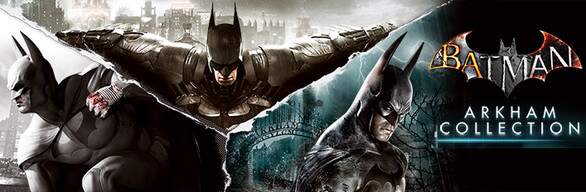
Rocksteady found Batman: Arkham Asylum a formula that still works. Later Arkham City and Arkham Knight, which expanded and refined it while Arkham Origins from WB Games Montréal acted as a prequel to the other games. The four games are different on several points, but they share a strong basic idea: they must make you feel like Batman.
I have played all four games, and even though they have some years on the bake, I still think the series is worth experiencing. Not necessarily because every single game is perfect, but because the combination of battle, stealth, gadgets, villains and a completed version of Gotham is still hard to beat.
A formula that didn't need to be rediscovered
One of the most impressive things about the Arkham series is actually how little the fundamental changes. Already in Arkham Asylum finds a combination of freeflow games, stealth and gadgets, on which the later games primarily build.
The combat system is still one of the greatest forces in the series. Batman can move from enemy to enemy in a floating battle where battles, parades and evasions are linked to long combinations. It's not just about pressing the attack button. You have to keep an eye on enemy movements, react to attacks and choose the right moments to use your gadgets.
As the enemies become more varied, fighting also becomes more interesting. Some demand that you react quickly, while others force you to think a little more about who you attack first. It is not a very complicated system to learn, but it has a satisfactory depth that makes the fighting still feel good.
The Stealth part is at least as important. Batman is not a traditional action hero who just runs into a room and hits everyone. He's dangerous because he can disappear, show up again and make his enemies fear what's hiding in the dark. You can move around the enemies, use ventilation channels and take them out one by one.
This is where the game really makes you feel like Batman. Enemies become more nervous as their comrades disappear and you can feel how the situation changes to your advantage. It's a different kind of power fantasy than the one you get through the fighting system, but it works at least as well.
Gadgets ties it all together. Batarang's, explosive gel and the various tools provide more opportunities both in battle and stealth. Some of them may feel a little superfluous, and in my opinion Detective Mode is used so much that it sometimes takes some of the experience out of the environment. But gadgets are still an important part of what makes the Arkham games Batman games rather than common action games.
Some of what I appreciate most about gambling is when they have a mechanics or an idea that makes them memorable. It does not necessarily have to be something that revolutionises the whole game industry, but it should be something that makes the game stand out. It is also a point that I make in my review of Hellblade: Senua's Sacrificewhere the game's special experience and atmosphere is what makes it worth remembering. The Arkham series's Freeflow system is another good example: a combat mechanism so successful that it is still one of the first to connect with the games.
Gotham is almost as important as Batman.
One of the reasons I still think the series is holding is its version of Gotham. The city feels dirty, dangerous and filled with people who have lost touch with reality. It's not just a set you move around in. It's part of the experience.
The Arkham games actually use several handles that are usually associated with horror. Not because the games are horror experiences, but because they often work with insecurity, darkness and the feeling of being trapped among people who are much more unstable than themselves.
It works particularly well in Arkham Asylum. Here you are confined to a small area with a lot of buildings and spaces, each of which can feel like small areas with its own dangers. This allows developers to check where the player is and when something should happen.
The Killer Croc section is a good example. This is not about defeating an enemy through ordinary struggle. You move around in his area, try to avoid him and keep a constant eye on the environment. It's one of the sequences I still remember best from the first game.
As the series moves into a more open world with Arkham CityThe experience changes. Gotham is getting bigger and you get the opportunity to move around between different criminal areas. It gives a different kind of life to the city. You can hear criminals talking, coming across different gangs and feeling something going on outside the main story.
However, it is also harder to create the same controlled insecurity when the player is free to move around in a large city. Arkham Asylum had an advantage of being able to place the player exactly where the developers wanted one. In the open worlds, it's harder to create the same moments.
Arkham Knight I believe that we have the most beautiful and accomplished version of Gotham. The city is larger, more detailed and much more impressive to move around. It is also here that traversal works best, where you can combine grapnel gun and gliding to get quickly through the city.
The bad guys make Gotham interesting.
Batman has one of the most interesting selection of villains in the superhero universe, and the Arkham series does a good job of showing why.
It is not only villains who will take over the world or create some great disaster. Many of them are people with serious mental problems, occupation and disturbed world images. This makes them more interesting in a strange way, because you can imagine the human mechanisms behind them, even if their actions and circumstances are far from realistic.
Joker is of course the most obvious figure. Mark Hamilton's voice performance is a large part of the identity of the series, and his relationship with Batman acts as a continuous thread. But it's also the smaller villains that make the universe interesting. Zsasz, Two-Face, Penguin and many others help give Gotham a feeling that the city is filled with people who each have their own kind of madness.
That is also one of the reasons why I think the games still have something to offer. They have a very clear understanding of who Batman is and what kind of world he belongs in.
From Asylum to Knight - development rather than revolution
Although the games are basically similar, a lot has happened from the first to the last.
Arkham Asylum is the foundation. It is not an open game in the same way as the later releases, but it has a more focused structure in which the surroundings and the atmosphere are allowed to fill. It is still entertaining to play, and it is impressive how much of the series later gameplay that already works here.
Arkham City is the great enlargement. This is where Gotham is opened and you get a much bigger world to explore. It is a more ambitious experience and it manages to give the city an identity through the various areas and gangs that control them. This is also where the series shows how well it works to combine the well-known match and stealth with a larger world.
Arkham Knight Feels like the crown of the work in many ways. It builds on almost everything the previous games have done well and polish it further. The movement through the city is faster, the graphics are still very good, and there are plenty of side missions and content to address.
The battery is one of the great news. I actually think it's really cool to drive around, and the possibility of shooting yourself out of the car and continuing directly up into the air is a good addition to the movement through the city. It's especially the thought sequences that I find harder. They feel a little like an arcade idea that's been pushed into the game, and they don't quite fit the Batman fantasy that the rest of the game hits as well.
The story in Knight is also a little more mixed up for me. I am not particularly pleased that Joker is again taking up so much after the end of the Arkham City. But gameplay is difficult to deny how much the game has to offer.
Arkham Origins is slightly different because it is developed by WB Games Montréal and not Rocksteady. It's a prequel where you meet a younger and less experienced Batman. The game is in many ways like Arkham CityAnd it's not necessarily here that you find the biggest changes in the series formula.
I still think it's a good Arkham game, though. It has some good moments, and the relationship between Batman and Alfred provides an interesting insight into a former part of Batman's life. The Joker's role is also worth highlighting, especially because you get a sense of how his fascination with Batman begins.
I don't necessarily think that Origins is better than the other games, and history doesn't hit me quite so strongly either. But it is certainly not a game you should skip if you want to experience the whole series.
Bosquats, Riddler and all the extra
The Arkham series also has some memorable bosfights. It can be difficult to make varied bosfights in a game where so much of the gameplay is about the Freedom game, but there are still several good examples.
The Killer Croc section in Asylum is one of my favorites precisely because it breaks with the ordinary struggle. Mr. Freeze game in City is also excellent because you have to adapt your approach as he sees your methods. And in Origins there's a stealth section with Bane that I think works really well.
Then of course there are Riddler and his trophies. I have actually completed all the Riddler challenges in every game, so I have been spending plenty of time finding them. I think they're funny enough and they fit the character. Riddler must be annoying, and his comments, when one finds his puzzles, are often entertaining.
But there are also limits. I think you could easily halve the number of trophies without losing anything significant. In Asylum they work best because they are fewer and often more directly connected to the universe. It could be an object from a particular villain or an image to be examined. In the later games the crowd just gets a little violent.
Arkham or Spider-Man?
If you have played Marvel's Spider-Man games, you will probably be able to recognize part of the Arkham series's gameplay principles. The fighting, the combinations of attacks and evasions and parts of the stealth system have obvious similarities.
That is not necessarily a criticism. Spider-Man games are also very good, and it's hard to beat the feeling of swinging through New York. That's one of the funniest things about those games.
But sometimes I miss the atmosphere of the Arkham series. New York in Spider- Man is lighter and more colorful, while Gotham is dark, dirty and unpleasant. Batman is also a completely different protagonist than Peter Parker. Where Spider- You are often witty and talkative, Batman is more stoic and serious.
Both series have their strengths, but if you want a more gloomy superhero experience, I still think Arkham is something special.
What order to play Batman: Arkham games in?
There are several ways to play the four games. If you follow the story chronologically, you have to start with Arkham Origins, then play Arkham Asylum, Arkham City and finally Arkham Knight.
If you follow the order of the release, it is said Asylum, City, Original and Knight. It is also a perfectly reasonable way to experience the series because you get the development of the games in the order in which they were created.
Personally, however, I would recommend a slightly different order: Arkham Asylum, Arkham Origins, Arkham City and Arkham Knight.
It may be a slightly controversial recommendation, but I think it makes sense to start with the game that establishes the series's basis and then move on through the improvements that come in the later games. I personally prefer City to Origins, and the two games are so similar to each other that I think you can switch them around. But I wanted to save City for Origins.
It is also about that it can be difficult to go back to an older game once you have gotten used to the improvements in a later release. Therefore, I think it makes sense to play the series in a sequence in which the experience develops rather than just to follow history.
If you want to go through all four main games, you also have to set aside a lot of time. HowLongToBeat estimates the main stories together for about 54-55 hours. It is without taking into account all the side missions and the Riddler trophies, so there is plenty to do if you want it all.
Batman: Arkham series still worth playing?
Yeah. Although the games have some years on the bake, I still think Batman: The Arkham series is among the best superhero games you can play.
The fighting system still holds, the stealth part works, and Gotham is a great setting for the stories. Graphics are of course ageing differently, but especially Arkham Knight Still looking really good. And most importantly, there is a general understanding of what makes Batman interesting as a character.
Not all parts of the games are equally successful. Some stories are stronger than others, there are a little too many Riddler trophies, and Batmobile's mind sequences in Knight are not exactly my cup of tea. But that does not change the fact that the series as a whole is an excellent experience.
If you've never played Batman: Arkham series, I certainly think you should give it a chance. That is also why I think it belongs among my Must Play - games that deserve to be experienced because they have something special to offer.
And if you've already played it, there are good reasons to return to Gotham.

