We Were Here - the best Co-op game series you may not know
Asymmetrical Co-op: What makes the series unique
We Were Here is a less well known but incredibly entertaining Co-op puzzle series. What distinguishes it from many others Co-op games are its asymmetric Co-op. In practice, this means that players are typically separated, do not see the same environment and have different information or control mechanisms. I don't see what you see, and I see only half the riddle. I may see a piano in the room, but unless you tell me exactly which notes to play, or which keys to print, I can't solve the puzzle - and maybe I don't even know if the piano is important at all. To move forward, both parties must actively communicate, describe their surroundings and work together to solve puzzles - it is not enough for one player to "find the solution" alone.
I like it too. Portal 2, which is amazing and requires all four portals in each Co-op- The chamber is used correctly. But often it happens that one player has already figured out the solution and just asks the other to place his portals. It still provides cooperation, but it is less intense because one player can "take over." Also in Escape Simulator can one player complete the entire puzzle alone, so Co-op becomes more optional than necessary.
IN We Were Here The dynamic is different: both players must be fully committed, and every little detail can be crucial to success. Small items, colors or symbols that one player sees can change the solution for the other. This makes the series unique and provides a deep, rewarding experience that you rarely find in others Co-op game.
See my review of Portal 2 here and Escape Simulator here.
The series over time: from first game to Forever
♪ I started with the first ♪ We Were Here, which fortunately is free on Steam - a perfect introduction to the series. My playing time is distributed as follows: 3 hours in the first game, 1 hour in We Were Here Too, 9 hours in Together and whole 17 hours in Forever.
The progression is clear: each game adds several hours, better graphics, more history and personality. The joker, who in the first game only acts as a theme, gradually becomes more important and voice in the later games. The Borg theme, which is mostly background color, becomes an integral element in environments and puzzles in Together and Forever.
Each new game feels like a natural upgrade - more kinds of puzzle, more interactive elements and more variation in the experience. It makes it fun to play the games in order and see how the series develops.
Example of asymmetric Co-op: arms and shield puzzle
One of the most illustrative puzzles in We Were Here Too starts when both players enter separate rooms filled with statues. At first it seems like an ordinary room, but it turns out quickly that every detail in your room can be crucial for the other's understanding of their own puzzle.
In this puzzle one player has statues with logos above and hands that can hold weapons, shields or nothing, as well as a large steering wheel used to hold the lava down. The second player stands in front of empty statues and a lot of weapons, which must be matched correctly with the first player's information.
It requires constant movement back and forth, precise communication and timing. One player describes weapons and shields, but must always run back and adjust while keeping the lava under control. Small details can cause chaos: "Uh... do the pictures of the statues have animals on them?" - "Yes, they do." - "Which ones?" - "Oh... I gotta let the lava rise a little so I can run over and check again."
An important part of the puzzle experience is that you often feel you have described an object correctly - when you only see one thing. But when the second player has many items to choose from, it is almost impossible to hit all the details the first time. It creates a natural future and back conversation, where you can fine-tune information, double-check symbols and small elements and finally find a solution.
This puzzle perfectly illustrates why We Were Here is so engaging: both players must be fully invested, aware of details and collaboration constantly. It is not a game where you can multibag or ignore your partner - every detail counts, and it creates a deep and rewarding experience.
Atmosphere, environment and Gothic theme
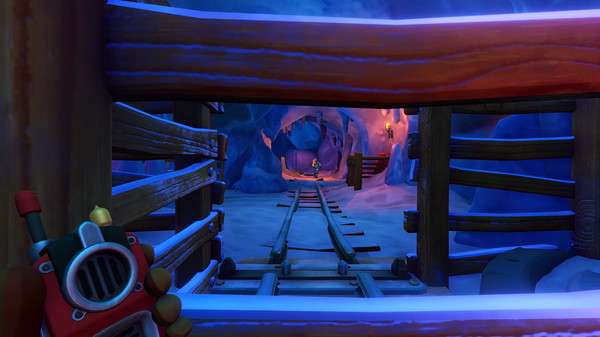
Atmosphere in We Were Here helps to make the experience unique. From the first simple, dark halls to Together and ForeverIts detailed environments with snow, ruins and Gothic-castle, each game becomes more vivid. The Joker gradually gets more time and history, making the game more engaging.
The environment is not just background; it is integrated into puzzles and gameplay, creating a sense of excitement and exploration. Stress moments such as lava, underwater mazes and puzzles, which require precise timing and communication, contribute to the experience and demonstrate how dependent you are on your partner.
Comparison with others Co-op game
In games like Portal 2 one player can often see the solution first and guide the other, allowing a player to "take over" and solve the puzzle alone. I Escape Simulator can one player complete the entire puzzle without help, so Co-op becomes more optional than necessary.
We Were Here is different: both players must be fully committed, and nothing can be done without cooperation. Small details in the environment can change the solution and communication must be constant and accurate. This makes the series unique within the Co-op The puzzle genre and provides an intense, rewarding experience that you rarely find in other games.
Weaknesses and replay value
The only real minus is that the game cannot really be played again after completion. The riddles are the same, so the replay is low. At a time when many games offer thousands of hours, it may feel a little limited in terms of value for money. However, the quality and depth of the series still makes it worth investing time in the first play.
Conclusion
We Were Here is without a doubt my favorite Co-op Puzzle game. Its asymmetric Co-op, requirements for communication, detail focus and progression through the series make it unique. Each game builds on the previous, with longer playing time, better graphics, more personality and more complex puzzles.
If you have not yet tried it, the first game is free on Steam - take a friend and discover for yourself why the series is one of the most rewarding Co-op experiences I've tried.
Play first games for free on Steam
Image Credit: Screenshot from We Were Here Together, Total Mayhem Games / Steam


[...] If you want more engaging cooperation, you can read my thoughts about Portal 2 and We Were Here, where both players work on the same puzzle at the same time, and interaction really means [...]