More games, more ideas - and more competition
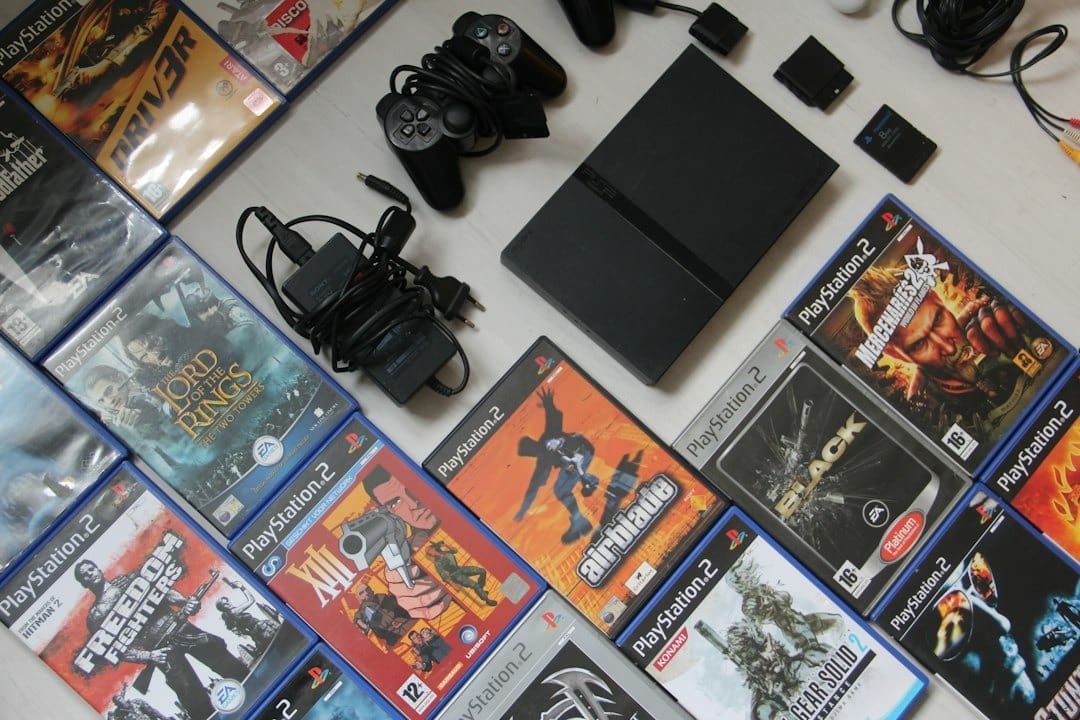
There are now a great many games to choose from. Every week new titles are published on Steam, and while the big releases often run with attention, hundreds of smaller games are developed at the same time.
It's easy to see it as a problem. There are so many games that it can be difficult to find around them. Some good ideas disappear in the crowd and it can be difficult for smaller developers to get their games discovered.
However, I think this is a positive development.
For more games also means more developers, more ideas and more opportunities for us as players. And perhaps most importantly, it means more competition.
Several developers get the opportunity to try ideas of
In the past, it was the major publishers who decided which games were able to be developed and marketed on a large scale.
This is, of course, still the case for the very large productions. But it has become much more accessible for smaller developers to get their ideas out to the players.
That doesn't mean all indie games are good. Of course they're not. But that means we have several different ideas to choose from.
A small developer does not necessarily have to convince EA or Ubisoft that an idea can sell millions of copies. They can try more to make the game, find their audience and see if it works.
It leaves room for games that might never have been approved in a large company.
It can be a little puzzle game with a single interesting mechanics. It can be an asymmetrical Co-op-games where two players get different information. Or it can be a game that builds almost its entire experience around a slightly crooked idea.
This is exactly the kind of variation I find interesting.
Small games do not have to compete with the big
I think you sometimes compare indie games with AAA games on some terms where the smaller developers never really have a chance.
A small study may not necessarily compete with Ubisoft on graphics, animations, content or the size of the game world. That is not necessarily the intention.
Instead, they can compete on the idea, the price and the experience they offer.
A game doesn't have to contain 50 hours of entertainment to be worth the money. If a developer has a good idea for a puzzle game that takes three hours to complete, why should it necessarily extend to 30 hours?
If the game costs a small amount, you may have a really good experience, complete it in one night and move on to something else.
This is not necessarily a bad deal.
In fact, I think there is something liberating about games that know what they want to be and not trying to fill in all the possible functions and activities.
That is also a point I have made in my report. column about Tomb Raider trilogy. Here the criticism is precisely about games that do many things quite well, but which have difficulty doing one thing really memorable.
A good idea can be enough
The puzzle genre is a good example of how much creativity can lie in smaller games.
Games such as Viewfinder and Superlimit are based on ideas that are relatively easy to explain but which can create some interesting experiences. It's not necessarily about inventing a whole new genre. Sometimes it's about taking an existing idea and performing it in a way that feels different.
The same applies to: Co-op-game.
I have written about We Were Here Serieswhere two players need to cooperate, even if they do not necessarily see the same or have access to the same information. It is a simple basic idea, but it creates a very special form of cooperation.
And i Together: Moon Escape and Berghotel Heist is it also the smaller, focused Co-op- experience that's downtown.
It is not games that try to compete with the largest productions on content or size. They're trying to give you a certain experience.
I think that's a strength.
Co-op and roguelikes can give small games long lifetime
A game does not need huge amounts of content to provide many hours of entertainment either.
Take for example PEAK and R.E.P.O. Both games have a relatively simple basic idea, but the social element can make the experience very different from time to time.
It is not necessarily new paths or a great story that make you return. It is the friends, the unexpected situations and the stories that arise when something goes wrong.
PEAK does not have the same amount of content as a large Assassin's Creed game, but that does not mean that it necessarily provides less hours of entertainment. An evening with friends can quickly turn into something quite different from the previous one.
The same can be seen in roguelike and roguelite games. Here lies much of the variation in that your experiments do not necessarily become the same. You get new opportunities, meet different challenges and have to adapt to the resources you get along the way.
MINOS is an example of a game where planning and the different options make each attempt feel different.
It's a different way of creating playing time than just building a bigger world or adding more missions.
And this is another area where smaller games can offer something that does not necessarily require a huge budget.
More games also mean more noise
However, it is not only positive that there will be more games.
When so many titles are published, it will of course be harder to spot the good ones. A game can easily be interesting and well done without ever getting the attention it deserves.
Steam has a huge selection, but it's also a challenge to get around it. The large releases often have a marketing budget and an existing fan base that smaller developers cannot match at all.
I've written about how to find new gamesand that is precisely part of the challenge. There are lots of interesting games, but sometimes you have to look for them.
In addition, successful ideas can be quickly copied. When a particular concept hits the spot, others often try to make their own version. It is not necessarily a problem in itself, but it may mean that the market is quickly filled with games that are very similar.
And then, of course, there's the question of AI.
I don't mind that smaller developers use AI as a tool if it helps them realize an idea they otherwise didn't have the resources for. If a solo developer stands between making a simple illustration himself or using a tool to get it in place, I can understand the choice.
But there is a difference between using a tool to help with a production and using it as a shortcut to save money at the expense of quality.
More games do not automatically mean more good games. That is precisely why it is still important to be able to distinguish between the games that have something on their heart and those that just try to exploit a trend.
Competition is good for us as players
I think it is fundamentally positive that more developers are given the opportunity to make games.
It gives us more choices, more creative ideas and more different experiences. This also means that the major publishers do not necessarily have to be our only option when we are looking for something new to play.
This does not mean that indie games are better than AAA games. I still want to play the big productions, and there are plenty of amazing games that require big teams and huge resources to develop.
But I think it is healthy that there are alternatives.
For maybe the next game you play doesn't have to be a huge production for 70 euros. Maybe it's a little puzzle game you're going through in one night. Maybe it's a Co-op-games that create a lot of fun moments with friends. Or maybe it's an idea you never imagined could act like a game.
That's exactly what I think the Indian boom gives us.
More games mean more noise and more titles that disappear in the crowd. But it also means that more developers get the chance to try something new.
And in the end, it's hard to see how it should be bad for us as players.

